A short list of books that had a big impact on me and still shape the way I work. They strongly influenced how I think about building software, organizing teams, and delivering value.
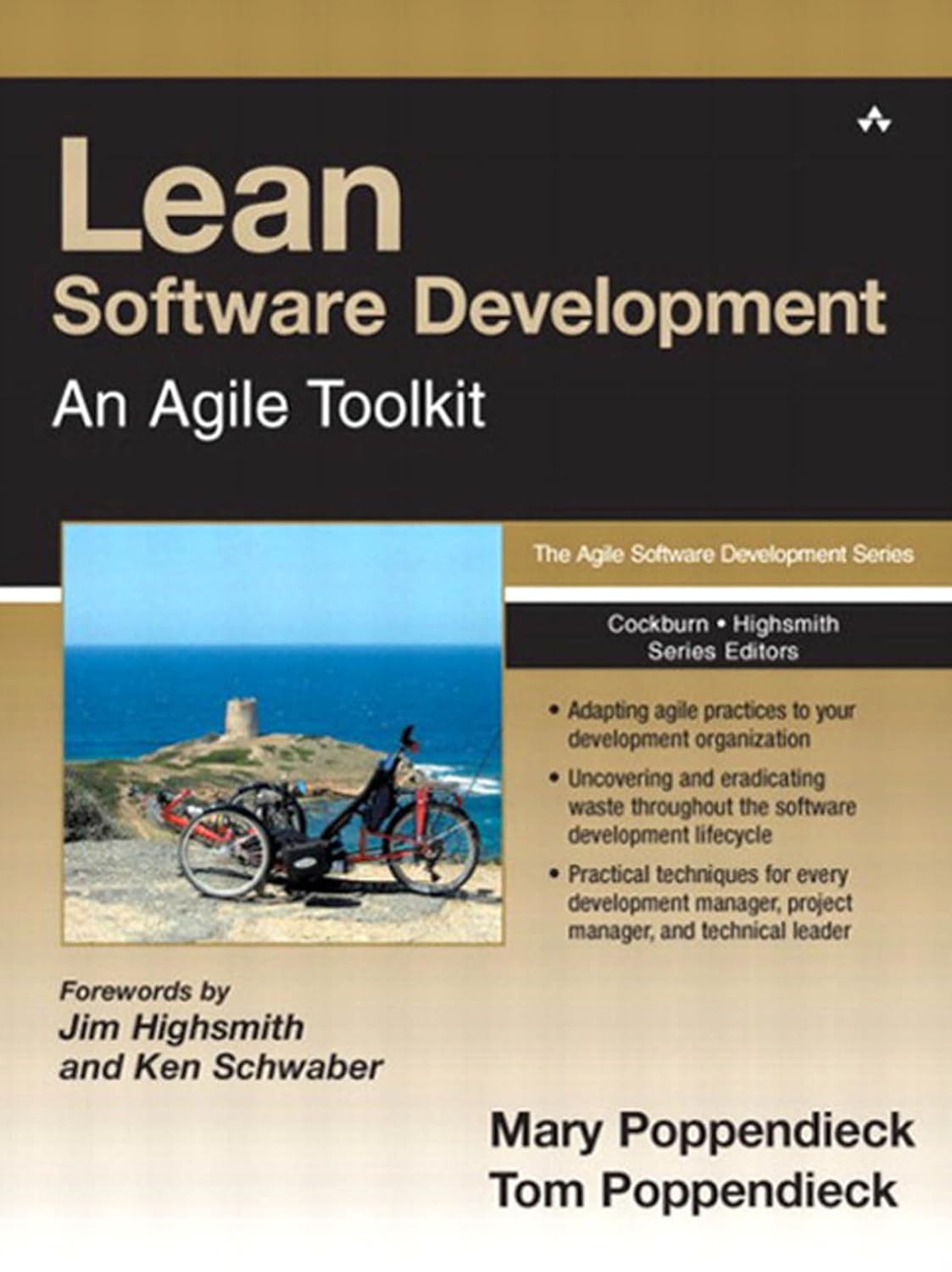
Lean Software Development: An Agile Toolkit
Published in 2003, this book translates lean manufacturing principles, rooted in the Toyota Production System, to software development. Mary and Tom Poppendieck identify seven lean principles and provide 22 “thinking tools” for applying them: eliminate waste, amplify learning, decide as late as possible, deliver as fast as possible, empower the team, build integrity in, and optimize the whole. The book won the Software Development Productivity Award in 2004.
This book served me as a guide in my early engineering leadership days, and certainly framed how I think about the entire software development process. Written when the Agile Manifesto was barely two years old, it's still worth reading, a lot of it remains remarkably relevant. Its influence runs through much of the later work on lean, agile, and continuous delivery, probably also reflected in some of the other books on this list.
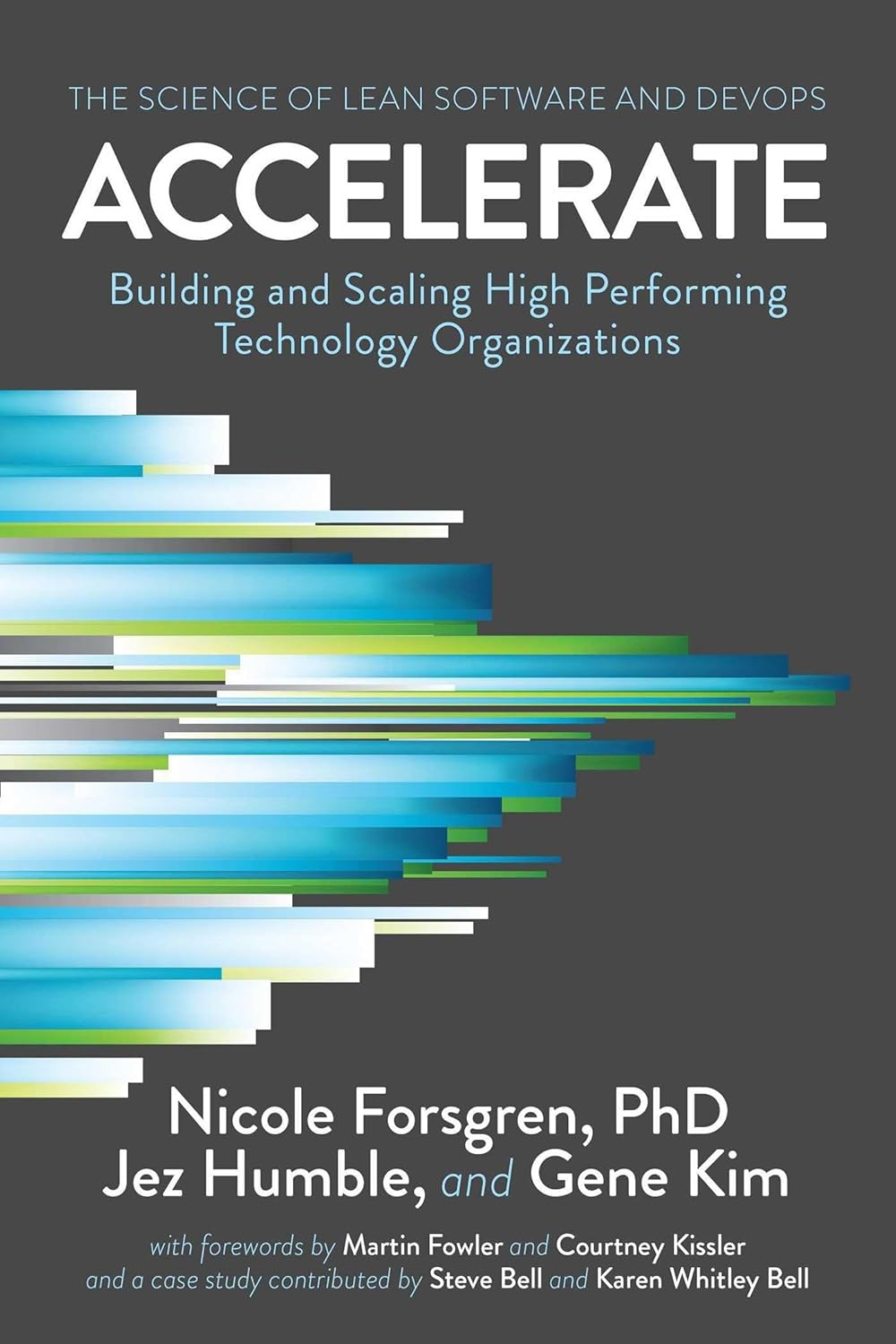
Accelerate
Based on four years of research through the DORA (DevOps Research and Assessment) program, this 2018 book presents evidence from over 23,000 survey respondents across more than 2,000 organizations. It identifies four key metrics for software delivery performance: deployment frequency, lead time for changes, mean time to recovery, and change failure rate. The research demonstrates what capabilities drive high performance. The annual State of DevOps reports continue this research. Nicole Forsgren also led the development of the SPACE developer productivity framework.
The idea to support what you believe to work well in software delivery with rigorous, data-backed evidence is of course an important one. I'm aware there's some skepticism and that it's not "proof". The authors looked at high performing teams and discovered they all excel in the same categories, but in principle the reasons for their excellence could lie elsewhere. However, they make their approach completely transparent, which in turn makes their findings unsuspicious of any "cargo culting". What's more, the book revives some personal memories for me: In chapter 16 they present ING Bank as a case study, and I had the chance to work in that environment for a short while back in 2016. In fact directly with Jordi, who's been interviewed for the book.
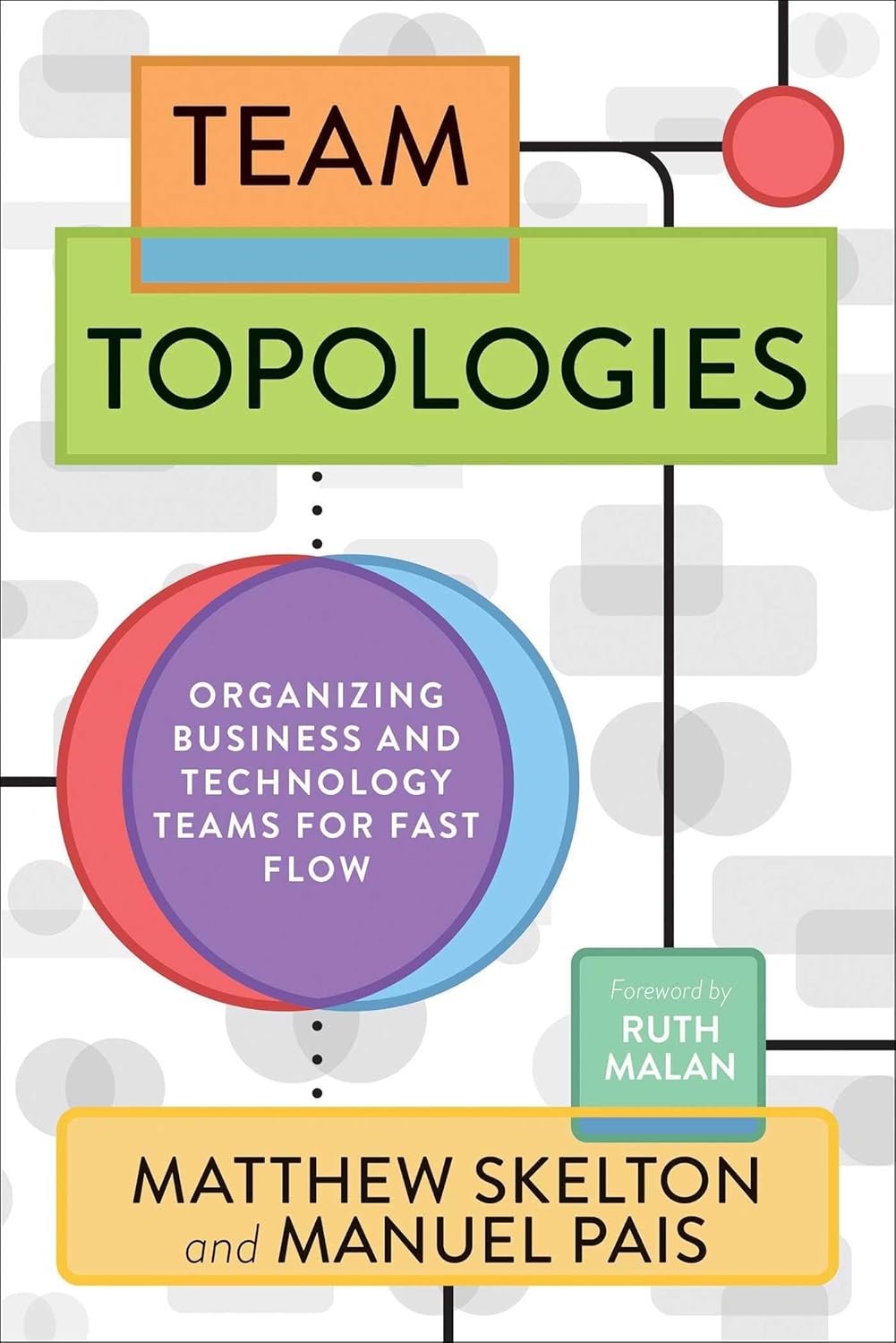
Team Topologies
Published in 2019, Team Topologies provides a practical model for organizing software teams for fast flow of change. Building explicitly on Conway’s Law, the observation that system designs mirror organizational structures, the book defines four fundamental team types (stream-aligned, enabling, complicated subsystem, and platform) and three interaction modes (collaboration, X-as-a-Service, and facilitating). A central insight is that team design should be driven by managing cognitive load: supporting teams exist to keep stream-aligned teams focused and effective.
Essential reading for anyone thinking about how team structure affects system design. Concepts like stream-aligned teams, platform teams, and cognitive load have become standard language in technology organizations. Skelton and Pais have since built an active community and consulting practice around these ideas.
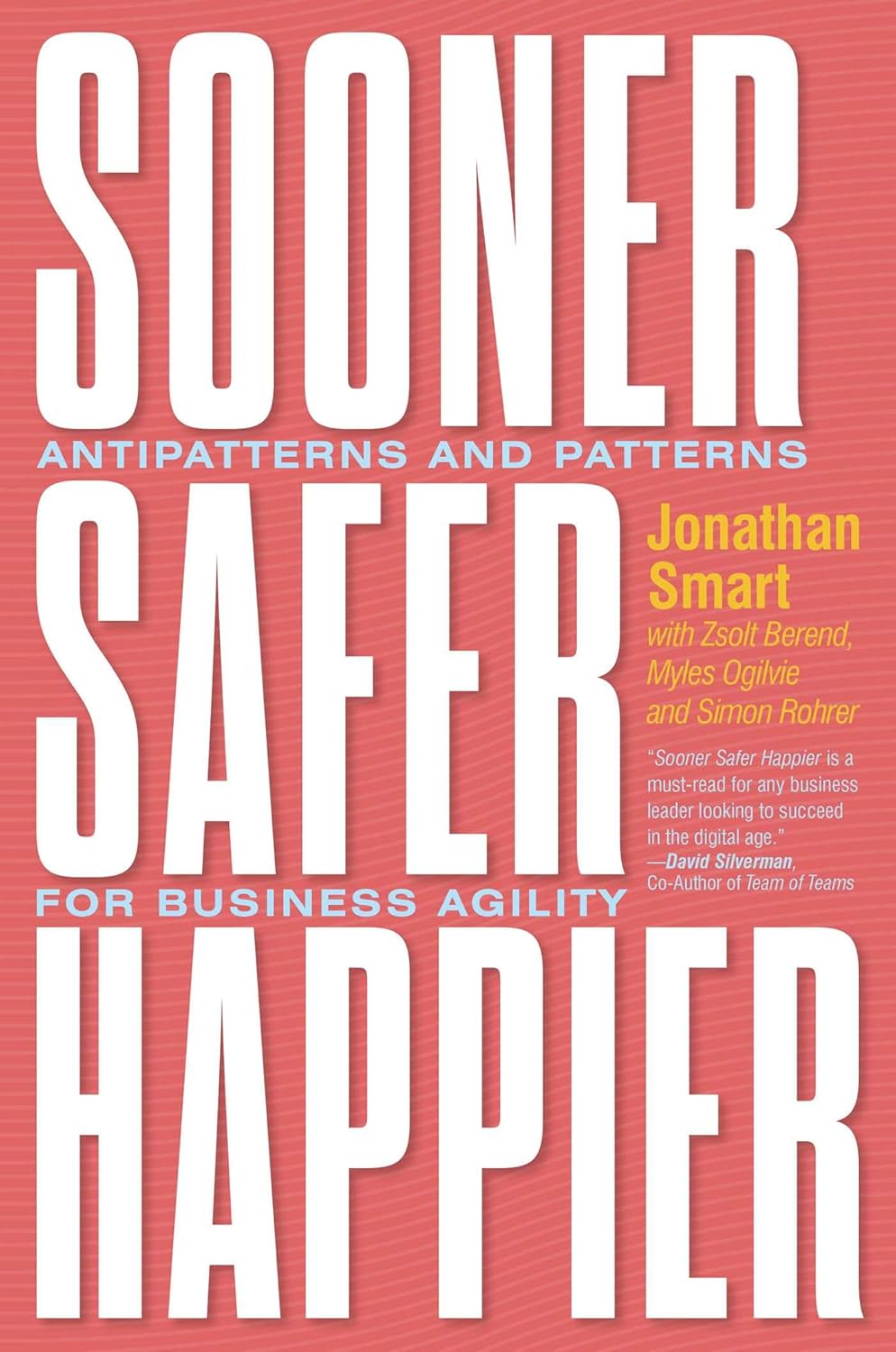
Sooner Safer Happier
Jonathan Smart spent nearly thirty years leading agile ways of working in large organizations, most notably at Barclays, where his teams delivered three times as much in a third of the time with fewer production incidents and the highest-ever employee engagement scores. The team won Best Internal Agile Team at the Agile Awards in 2016. This book, published in 2020, distills that experience into 26 antipatterns, 26 patterns, and 29 principles for achieving better outcomes across an organization.
It's an overall great book, but to me - maybe because I'm still a developer at heart - it particularly stands out that they included chapter 7: Continuous Attention to Technical Excellence. An aspect that I feel is a bit neglected in many books about software development processes and culture.
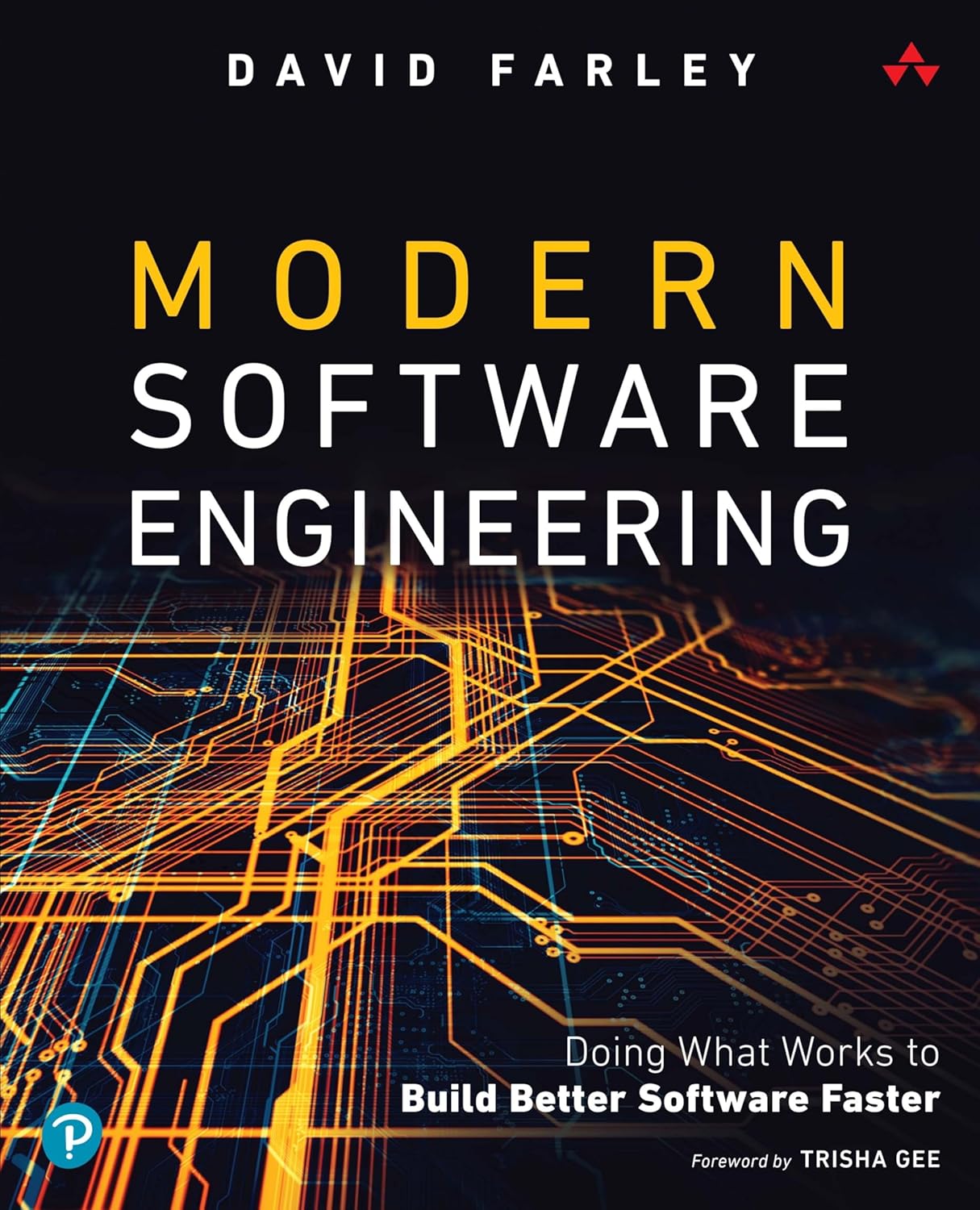
Modern Software Engineering
David Farley co-authored the seminal “Continuous Delivery” (2010) with Jez Humble, which won the Jolt Excellence Award and established the foundation for modern deployment practices. He was also a key contributor to the LMAX Disruptor, a high-performance messaging library developed at the LMAX Exchange. In this 2021 book, Farley distills decades of experience into a compelling argument that software development should be treated as a genuine engineering discipline, organized around two core activities: learning and exploration, and managing complexity.
What I appreciate about this book is how it ties together continuous delivery, test-driven development, and iterative work under a coherent framework of scientific thinking and engineering rigor. Farley also runs the popular Continuous Delivery YouTube channel, where he continues to explore these ideas.